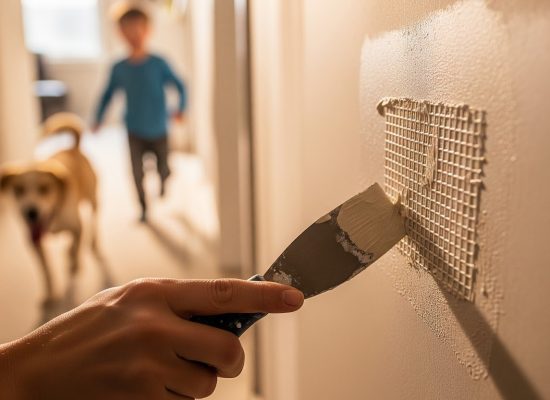
Drywall’s one of those things most people don’t think about until there’s a problem. But when cracks show up, corners crumble, or something leaves a dent the size of a grapefruit, it’s time to act. The question is—do you patch it up, or rip it out and start again?

As builders, we’ve seen it all, and we’re here to give you the honest answers.
When a Simple Repair Will Do the Trick
Let’s start with the good news. Most drywall issues don’t require a full replacement. If you’re dealing with any of the following, a tidy repair job should sort it:
1. Small Holes (Up to About 5cm)
Caused by nails, screws, door handles, or overenthusiastic kids with toys. These can usually be filled with some joint compound or patching plaster and finished off with a bit of sanding and paint.
2. Hairline Cracks
Often caused by house settling, minor temperature changes, or even drying shrinkage. These are more of a cosmetic issue than structural and can be repaired with filler and mesh tape.
3. Scuffed or Damaged Surface
Whether it’s moved furniture or general wear and tear, surface-level damage doesn’t need a full replacement. A good sanding, a bit of filler, and fresh paint should do nicely.
4. Nail or Screw Pops
When fasteners push out slightly, you’ll see a little bump or crater. Remove the offending screw or nail, refasten nearby, patch over, and you’re good to go.
When It’s Time to Replace the Drywall Entirely
Now for the bigger issues. Sometimes, patching up just papers over a deeper problem. If you spot any of these, it’s usually best to remove and replace the affected section—or the whole sheet, depending on the extent.
1. Water Damage
Once drywall gets wet, it loses its structural integrity. If it feels soft, crumbles easily, or has any sign of mould, don’t mess about—cut it out. Even if it looks dry now, mould can develop behind the surface.
2. Large Holes or Deep Gouges
If the hole is larger than a dinner plate, it’s usually more effort to patch it properly than it is to replace the panel. Especially in high-visibility areas where you want a smooth finish.
3. Sagging or Warped Drywall
This is often due to moisture or poor installation. Once it starts to bow or ripple, it’s nearly impossible to get it looking right again. Better to remove and start fresh.
4. Repeated Cracking in the Same Spot
If a crack keeps coming back even after repairs, it could be due to structural movement, poor framing, or joint stress. Patching it again won’t fix the root cause. You’ll likely need to replace the sheet and address the framing underneath.
Bonus Tip: Don’t Ignore What’s Behind the Wall
Drywall damage is often just the symptom. Water leaks, poor insulation, or shoddy workmanship behind the scenes can all lead to repeated issues. If in doubt, take the opportunity to check the condition of pipes, wiring, and timber behind the wall before closing it back up.
Repair Smart, Replace When Needed
A decent repair job can make drywall look brand new—but only if the damage is minor and the conditions are right. Know when to draw the line and swap out the panel. Doing it right the first time saves you time, money, and hassle down the line.
Need a second opinion? Contact us today for us to take one look and let you know if it’s a quick fix or a weekend project.